CRUX-X, CRUX-Vault-Zero, and the path to AGI (Part 1 of 3)
Part 1 of 3 · Part 2: CRUX-Land run report → · Part 3: What CRUX-Land changed about agent capability →
Background
A couple of weeks ago I reproduced CRUX #1 on Windows — a one-day side project porting the original CRUX agent-capability eval to a Windows Store publishing task. The reproduction worked: the agent shipped TimeZonr to the Microsoft Store in 77h 48m wall-clock, with three net human inputs total. As an experiment that was basically a success.
The thing I didn't expect was how much of that experiment was plumbing. The agent doing the actual app-publishing work was a small slice of the calendar. Most of the run-up was provisioning the controller VM, wiring up the agent harness, building the credential vault, plumbing the Slack channel, writing the kill switch, the telemetry hooks, the dry-run smokes. None of that was task-specific. I'd build all of it the same way for any externally-gatekept real-world task.
Which suggests there's a methodology in there.
CRUX-X
I started thinking about CRUX-Windows as the first instance of a class, not the experiment itself. What's left after you abstract over the task is a process — a way to take an externally-gatekept real-world objective and walk through:
- generating the protocol (success criteria, scope, constraints, agent instructions, kill-switch design)
- provisioning the infrastructure (controller VM, agent harness, credential vault, comms channel, telemetry)
- running the experiment (kickoff, heartbeats, intervention logging)
- evaluating it
- writing it up
I'm calling that CRUX-X. The shape:
Legend:  [doc] artifact     « actor » agent     ──verb──►  execution


  [Methodology]                         artifact — markdown spec with [SLOT]s
       │
       │  « Designer » drafts
       ▼
   [Protocol]                           artifact — task-specific instance
       │
       │  « Operator » drafts a fresh
       │    Manifest per run, kicks off
       ▼
   [Manifest]                           artifact — per-run binding;
       │                                           one Protocol → many Runs,
       │                                           each with its own Manifest
       │  binds
       ▼
    « Agent »                           autonomous LLM session
       │
       │  executes against
       ▼
  ══ The Run ══                         execution — wall-clock window
       │
       │  interacts with
       ▼
 External party(ies)                    real-world institutions, APIs, KYC surfaces
For CRUX-Windows specifically, the Protocol resolved §1 ("hypothesis") to "Publish a Windows app to the Microsoft Store"; §3 ("inputs") to a Partner Center developer account, Gmail, GitHub PAT, signing cert, and controller VM; §5 ("comms + kill switch") to a Slack channel and a gateway-stop kill switch; and §7 ("budget / constraints") to a $500 Anthropic API cap and 14-day wall-clock cap. The Run itself took 77h 48m with three net human inputs.
Reproducibility lives in the Manifest. The Protocol is the task spec; the Manifest is per-run state — model id, budget caps at t=0, credential vault, controller VM, the t=0 timestamp itself. To re-run CRUX-Windows six months from now against a newer model, I draft a fresh Manifest against the same Protocol.
CRUX-X v1 is at github.com/yzdong/crux-x.
I'm sharing CRUX-X partly so other people can bootstrap CRUX-style experiments without rebuilding the plumbing from scratch, and partly because the methodology itself is a useful frame for talking about what agents can and can't do today. Today's agents can execute against a well-defined task — fixed inputs, fixed success criteria, an external party that already exists — and run it to completion. Today's agents can't dynamically modify their own inputs or define what counts as success in the first place. CRUX-X bakes that division in: the Designer and Operator define the parameters of success, and the Agent executes against them. As models get more capable, the Operator's role shrinks and the Agent's grows.
What I want to validate
CRUX-Windows had a high likelihood of success going in. CRUX #1 had already validated the basic shape, and the task itself was software-contained: every action happened in a browser or a terminal, and Microsoft Store publishing is well-documented enough that a careful human could follow the path in a weekend. I wanted the next experiment to be more ambitious along axes CRUX-Windows didn't stress. Something that touches the physical world, where the external parties aren't in Silicon Valley and haven't heard of agents, where the task runs for weeks instead of days, and where the requirements aren't fully specified up front — they emerge during execution and have to be reconciled between agent and operator in real time.
This project is also heavily inspired by Evan Ratliff's Shell Game, which I've been following since 2025. Ratliff builds agents, sends them out into the world to do real things, and reports back — often hilariously. The shape of his experiments is what I wanted CRUX-X to support: a real-world task, a real agent, a real outcome, observed honestly even when the agent fails ridiculously.
So: a sequence of CRUX experiments rather than just one.
CRUX-Vault-Zero
I needed a goal to organize the sequence around. Something that decomposes into a handful of distinct CRUX experiments, each with its own externally-gatekept external-party class. I picked: prepare for off-grid living, end-to-end, with agents doing as much of the work as they can.
This is half-joking. The bull case for AI rolls quickly into the doomer case, and either way I'd like to know there's a place to go that has reliable water. The Fallout reference in the project name is intentional.
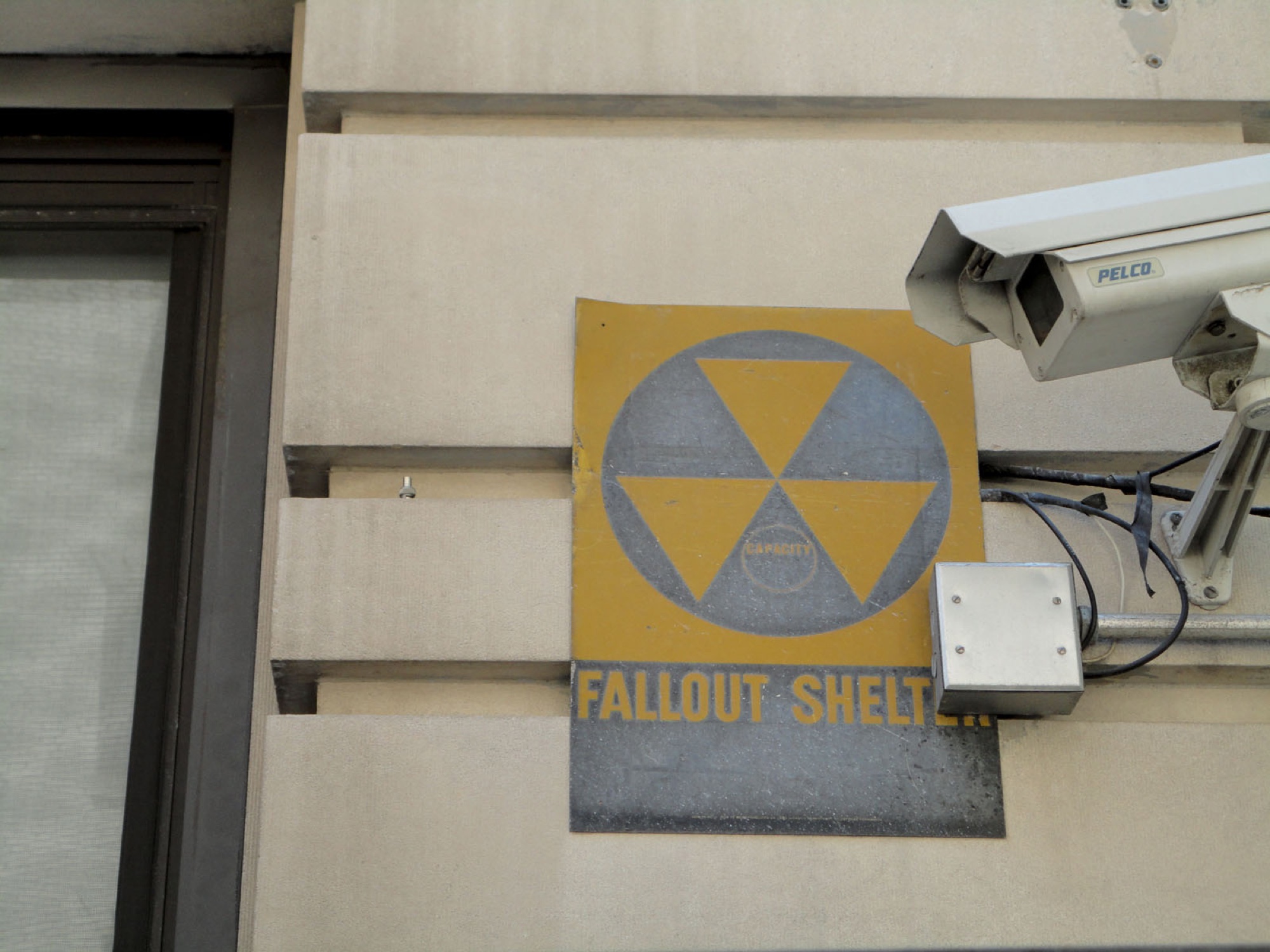 Photo: Gesalbte / Wikimedia Commons, public domain

It's also a deliberate naivety test. With CRUX-Windows I had a software background to fall back on — I know how to build software, so I could read the agent's calls and spot when something looked off. With off-grid living I know almost nothing. I'd never heard the word "quitclaim" before this run, I can't tell a county recorder from a state water board, and I don't know what a "minimum-lot-size" zoning rule actually constrains. That's the point. I want to see what an agent can do when the operator can't second-guess substantive task-shape decisions on the merits and has to lean on the agent for the actual reasoning.
And the goal decomposes naturally into the kind of experiments CRUX-X is designed to run. The standard off-grid decomposition — Carla Emery codified it in The Encyclopedia of Country Living in the 1970s, and most subsequent handbooks reproduce some version of it — runs roughly:
- acquire raw land suitable for off-grid use
- put a structure on it
- water solution (well, spring, rainwater catchment)
- energy solution (typically solar + battery)
- sanitation solution (septic, composting, greywater)
- food solution (gardens, livestock, preservation, storage)
Each goal decomposes into one or more CRUX experiments, each with its own real-world gatekeeper class — county recorder, state-licensed contractor, regional drilling firm, county building department, state water board, county health office. Each stress-tests CRUX-X against a different external party.
Working name for the umbrella project: CRUX-Vault-Zero. Each individual experiment is its own CRUX run with its own protocol, infra, and writeup.
CRUX-Land
The first run is CRUX-Land. The agent autonomously searches, evaluates, contracts, escrows, and closes on a piece of raw rural land suitable for off-grid living. Real money — $1,500 cap on the parcel, $2,500 all-in including closing fees. Real recording at a real US county recorder. Real deed in my name.
The $1,500 cap was an arbitrary pick — I just wanted something not too expensive. It forced the agent to be aggressively selective: at that cap there are very few viable parcels, so most of the run was the agent evaluating candidates and rejecting them for structural reasons. A looser cap would have meant fewer kills and probably a less interesting run.
What I imagined I would get
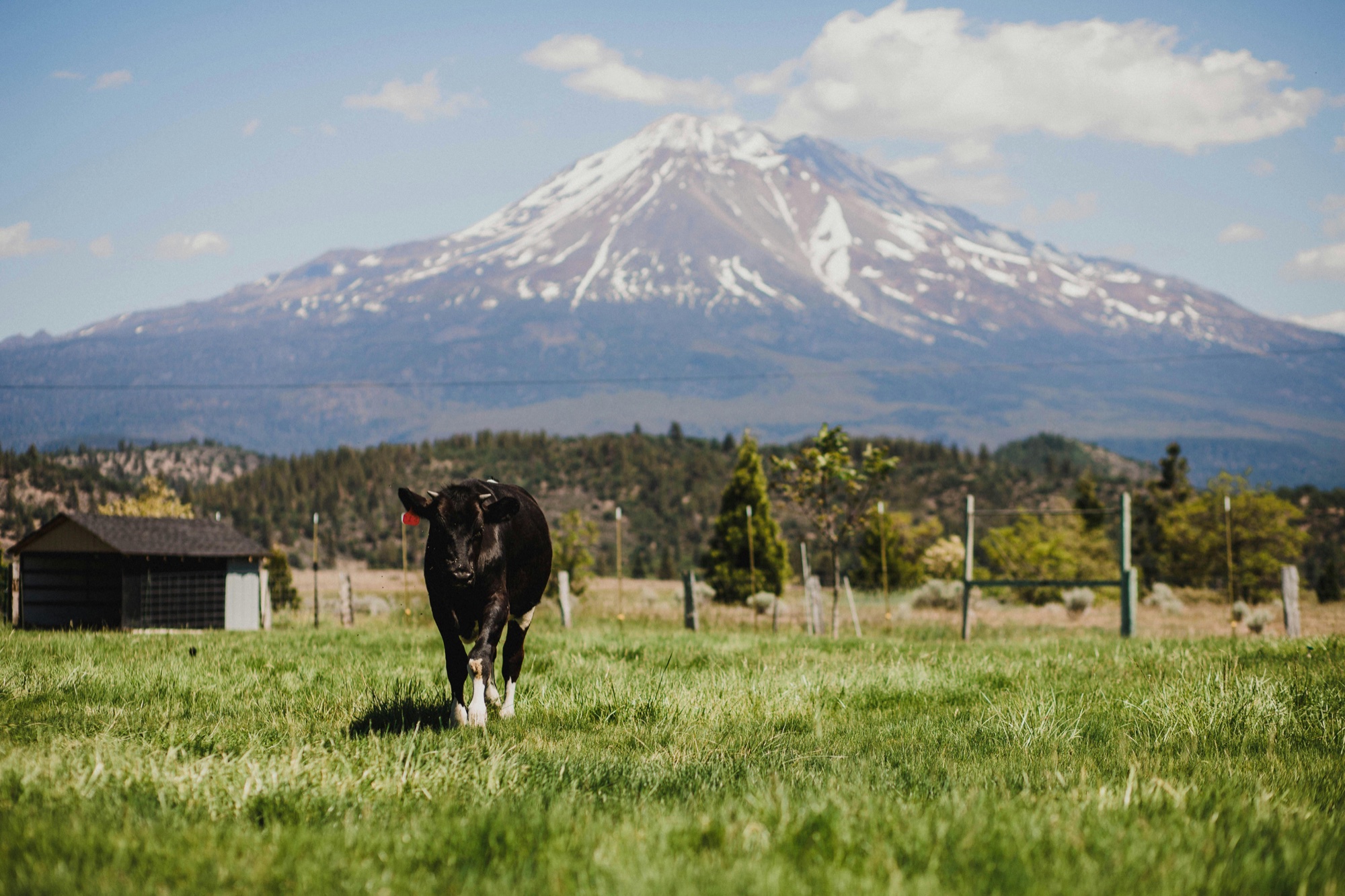 Photo: Marina M / Pexels
What I actually almost bought
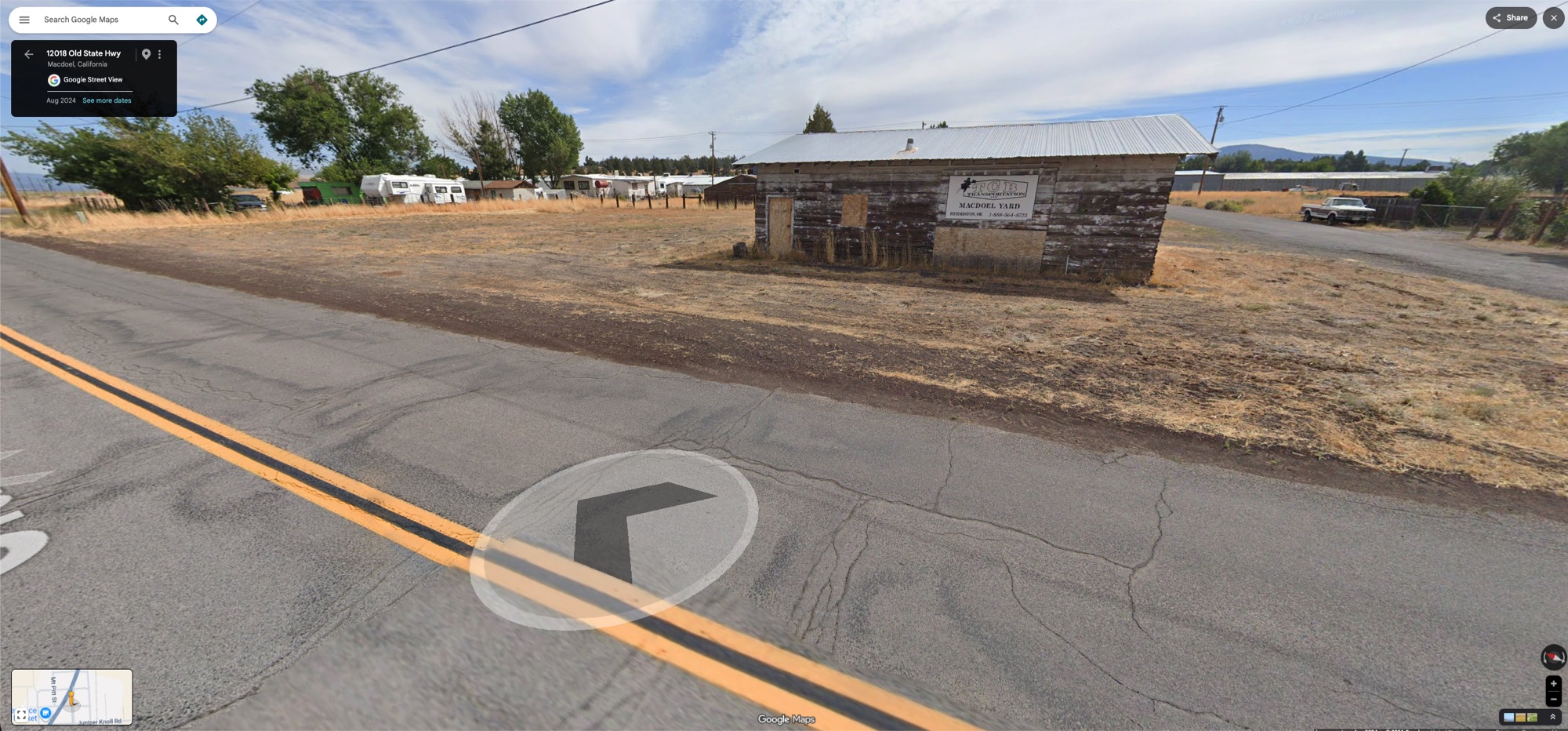
Spoiler: this experiment wasn't as successful as CRUX-Windows. The agent got all the way to placing a pre-bid on a "rural" lot in Siskiyou County (home to Shasta) and I was so close. A manual check a week before the auction led me to withdraw the bid. Read on to find out why.
Why this is a 3-part series
There's enough material from the run already that one post can't hold it.
Part 2 is the CRUX-Land run report. Some of the cast: a 200-page county PDF that ate $575 in fifteen minutes, ten dead channels that died ten distinct structural deaths, an agent that drew a hard line at typing a password but would happily reuse the session cookie I'd already typed in, a Costilla Craigslist seller who put in real work on the other end of an autonomous agent's inquiry, and a twelfth candidate the agent successfully cleared by answering the wrong question.
Part 3 is the synthesis. The question: how general is the current agent class — Opus 4.7 inside the scaffolds we currently know how to build — when you let it try a real-world transaction with real money and a real external party? My short answer after six days of running CRUX-Land: not yet, and the deepest gap is in the model's disposition to push back when the brief itself is structurally wrong. Part 3 — What CRUX-Land changed about the way I think about agent capability — walks through what would have caught the $1,200/off-grid constraint conflict at Designer time, and which of the three required model dispositions is the hardest to instill.
Reading list
If you want to follow along:
- Methodology (CRUX-X v1): github.com/yzdong/crux-x
- CRUX-Land protocol: github.com/yzdong/crux-x/blob/main/experiments/land/protocol.md
- Original CRUX project: cruxevals.com/crux-1
- Evan Ratliff's Shell Game: shellgame.co
- My CRUX-Windows reproduction: /blog/crux-windows
— Zi